Jhabraj Neupane
By Fin Dunford
Foreword
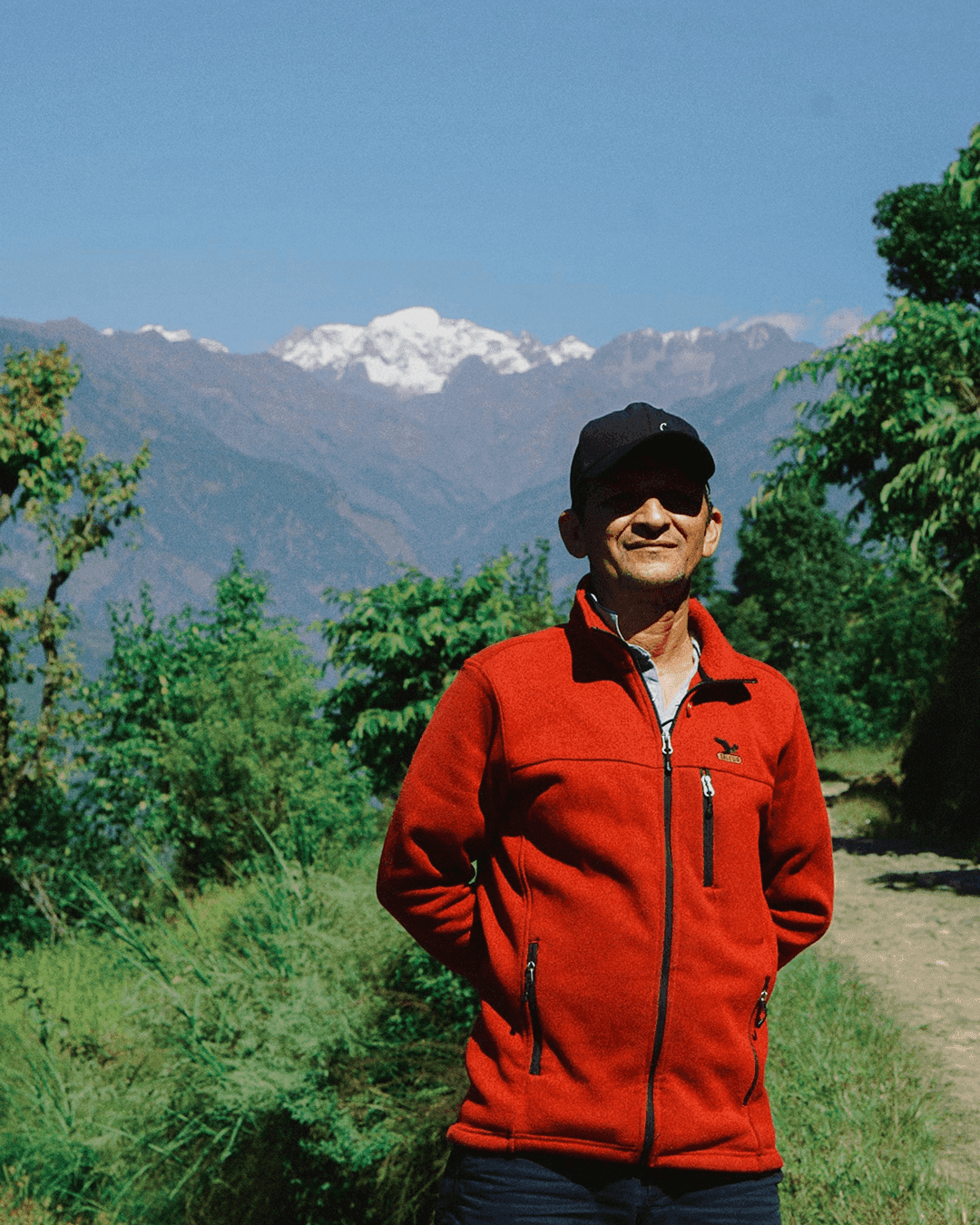
In 2024, after a five-hour bus ride from central Kathmandu to Karmidanda, a village in northern Nepal’s Rasuwa District, I dismounted from the back of a dirt bike and gingerly walked towards my host for the next couple of weeks.
Through a pairing of touristic ignorance and Isaac Newton’s less commonly known fourth law of motion – motion sickness – the day up until that point had been taxing, and I carried a subtle feeling of unease.
Now walking towards me, Jhabraj Neupane draped a khada around my neck as a welcoming gesture of friendship.
The gesture itself is commonplace in Nepal, but there was a warmth and an earnestness to the man that was disarming.
Unease made way for relief.
After indulging in his wife’s soulful dal bhat, Jhabraj showed me to my room and invited me on a walk.
Our days would follow a similar pattern until my departure.
Karmidanda is a village in the Uttargaya Rural Municipality, which forms part of the Rasuwa District in northern Nepal.
Close to the Tibetan border and home to large parts of Langtang National Park, the sparsely populated region enjoys the tranquility that comes with being largely untouched by large-scale modern infrastructure.
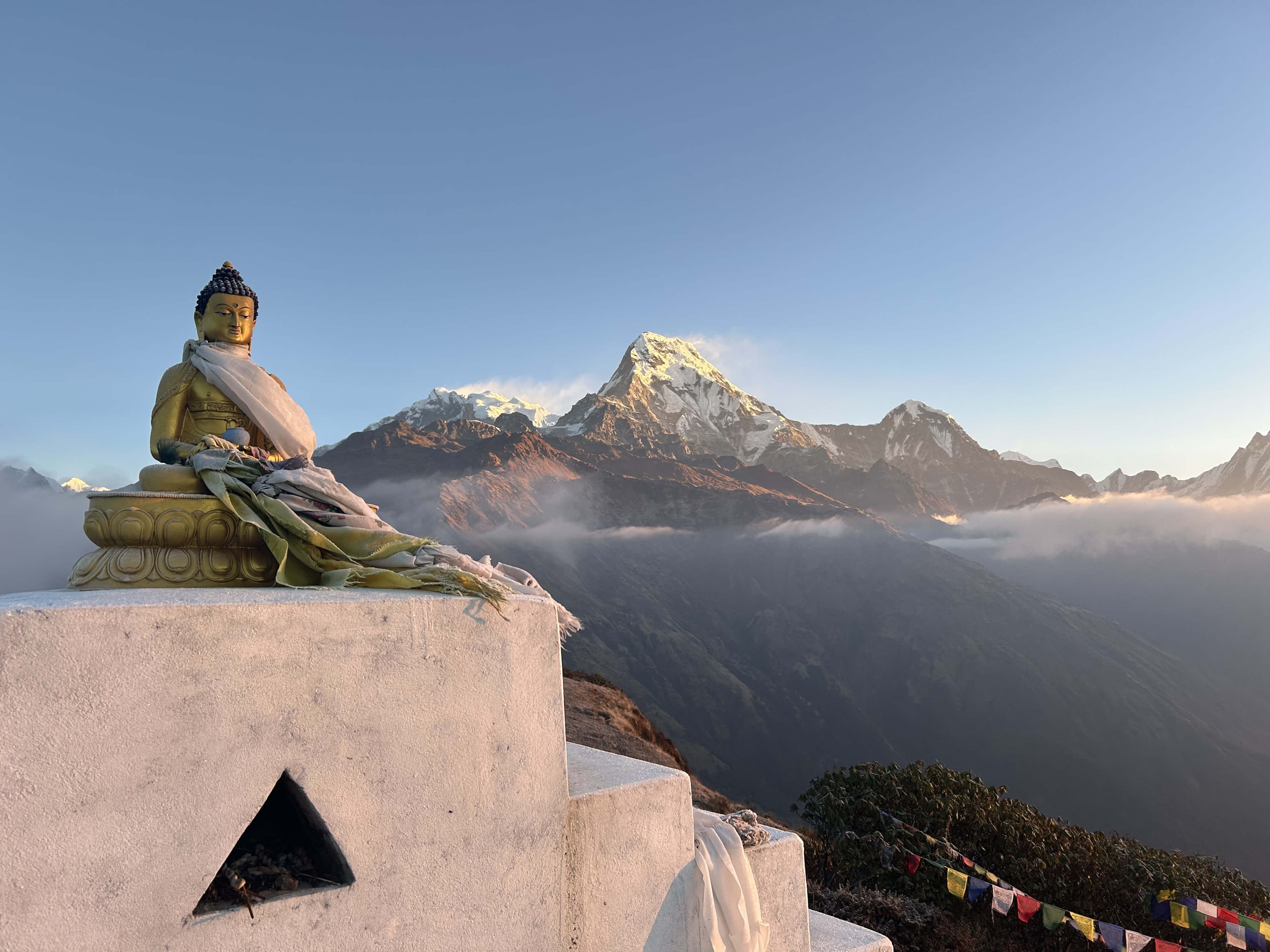
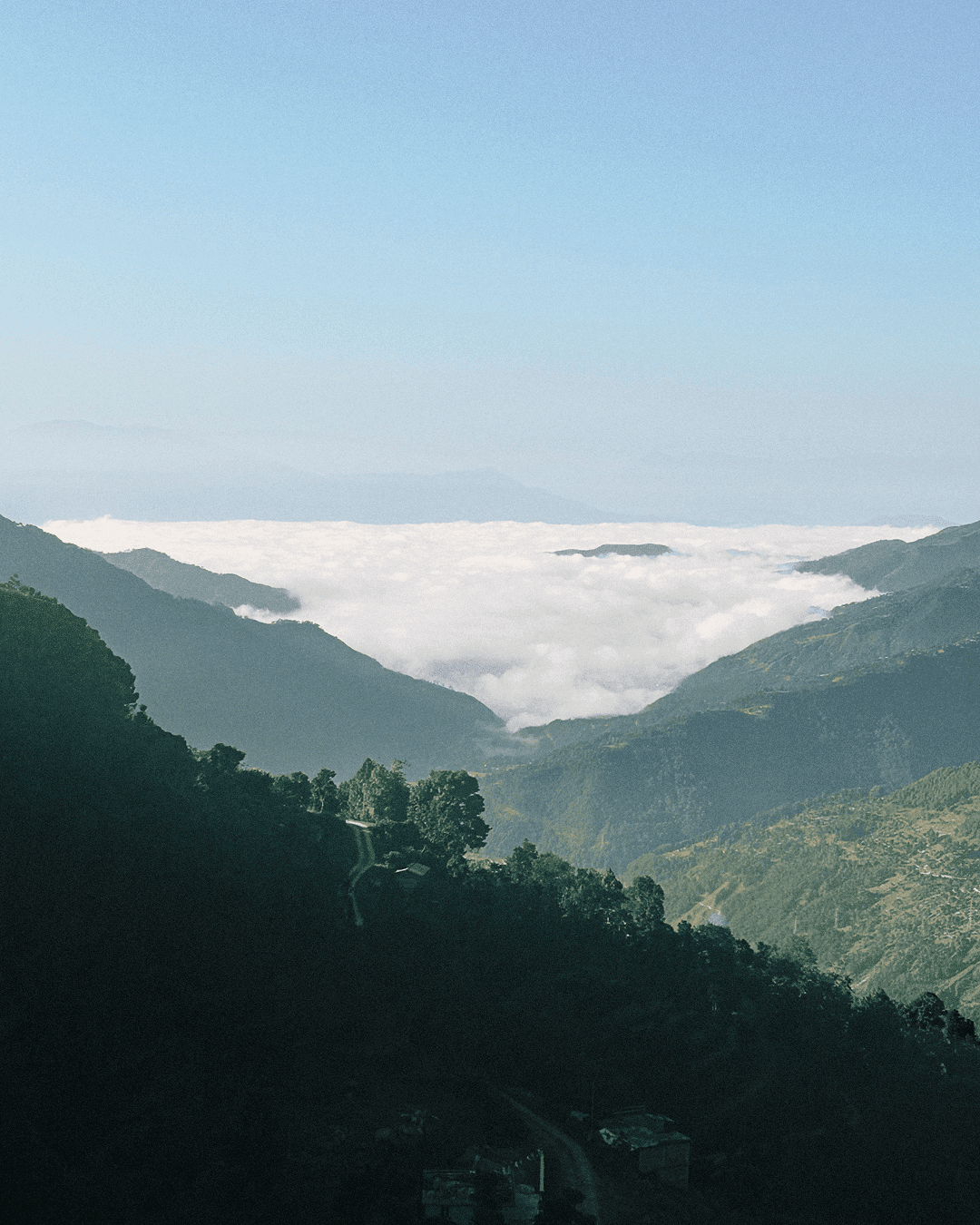
Carving through the heart of the region is the Trishuli River, fed by glacial waters and snowmelt from Tibet through the Bhotekoshi, as well as rainfall.
Over hundreds of years, the Trishuli has played a key role in supporting the traditional agrarian lifestyle that defines the people of Rasuwa.
In the modern day, hydropower facilities have started to spring up along the river system.
Jhabraj is a loving husband, father and son.
He teaches English at the local school and many in his village see him as a community leader.
Our daily treks were physically demanding but spiritually engaging.
He told me what he thought it meant to be a man, having to act as the unwavering and immovable foundation of your family unit.
This included what he found challenging about his various roles as a leader and tricks that have helped him over the years.
I told him I was still figuring out what I wanted in life and whether the role he described was something I envisioned for myself.
Next it was misconceptions of the ‘developing’ world versus the ‘developed’ world.
Then it was Trumpian delusions, women, the optimal number of beers to drink, his favourite book, the benefits of Hinduism, the detriments of Hinduism, war, murder, greed and how best to keep a business shirt clean.
That is what struck me most – a man 40 years my senior and living a life fundamentally disparate from my own, and yet so many of our experiences were universal.
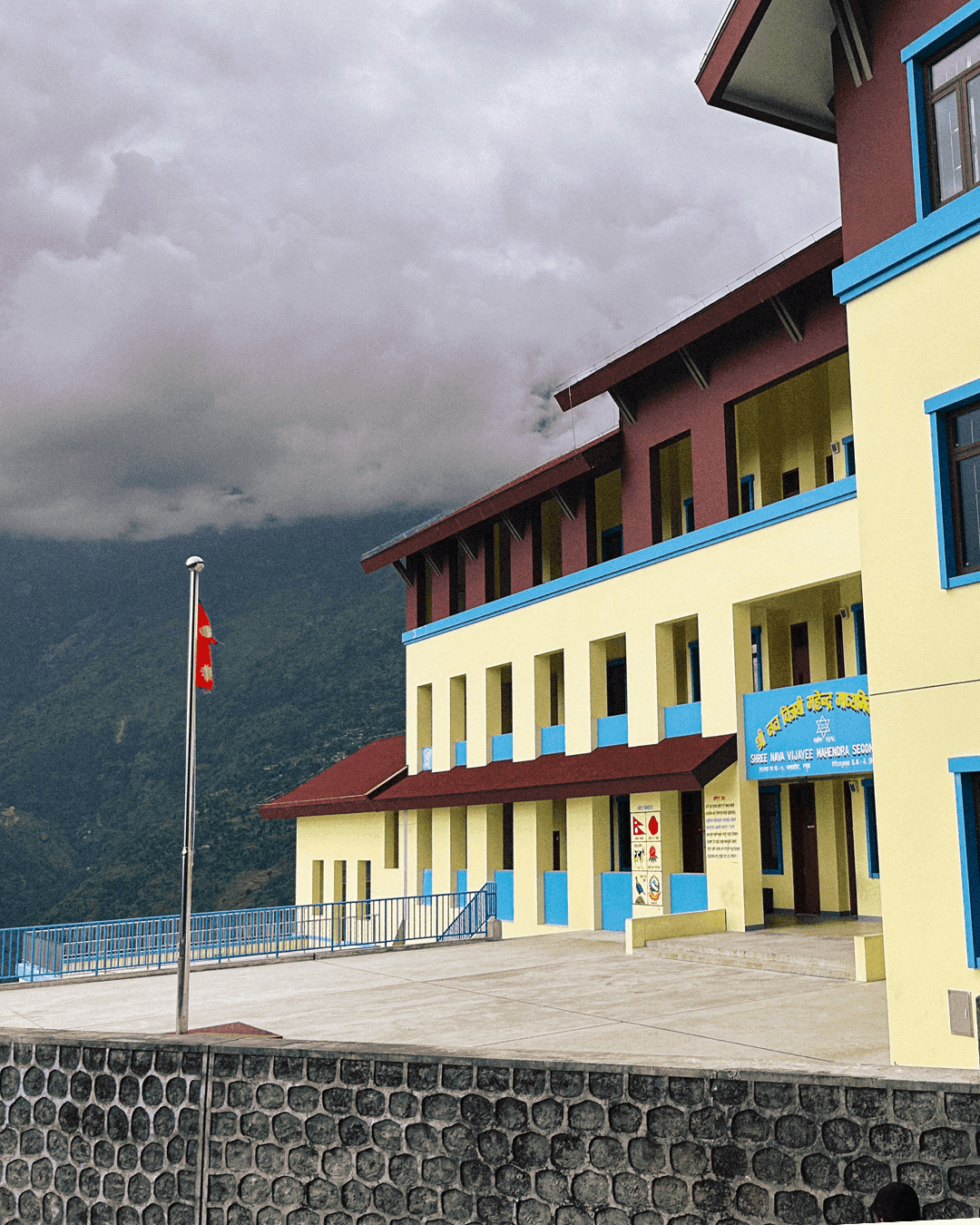
Building on this idea, we agreed that the next time I came to Nepal, we would journey to find the ghost of the mountain, the snow leopard.
I learned more about Nepal, humankind, and myself in those two weeks than any research project I had undertaken or article I had written.
I asked myself why that was. Why had it aligned with my understanding of the world so profoundly?
All of it was deeply human.
I wasn’t reading about how macroeconomic forces were playing out on a nationwide scale, or how a rebel militia had retaken the fight to a corrupt government and left a trail of destruction in its wake.
These wider contexts are crucial to their respective stories, but they’re impersonal.
I’d read about Nepal, about how its government functioned and how previous conflicts led the nation to its modern iteration.
But as a reader, I had no connection to the subject matter. It was information only.
My friend Jarrah and I wanted to create a publication that reversed that order of journalistic priorities.
So we created Istina Journal to tell stories through the lives of individuals, placing human experience at the centre of our journalism.
Rather than beginning with political, social or economic forces shaping a place, Istina examines how those forces are felt, understood and lived by the people within it.
Happy reading.
August 26, 2026
Jhabraj’s day starts like any other: milking his cow, taking maize to the mill, washing up and eating breakfast.
At 9.25am, he is descending the village’s meandering paths to the local school.
Then, ‘the earth started to shake’.
Within a matter of hours, the area would be utterly decimated by a flash flood which the International Centre for Integrated Mountain Development says was triggered by the collapse of bedrock and glacier ice on Langtang Lirung, a mountain near the Nepal–Tibet border.
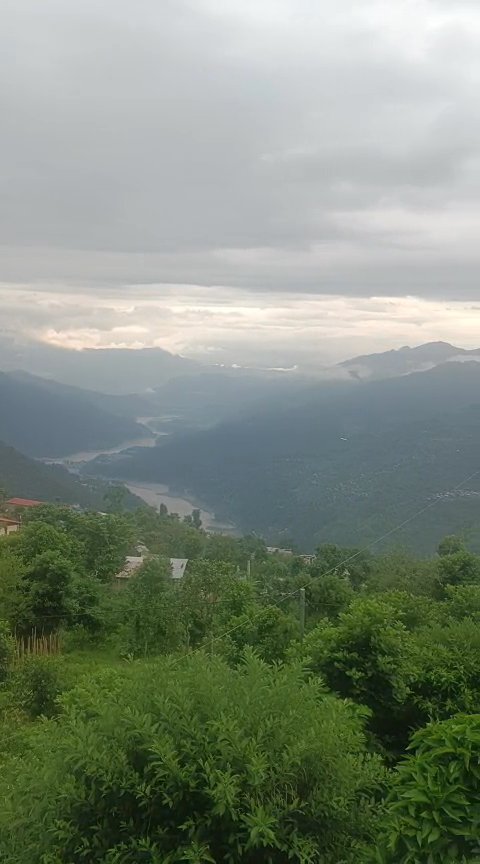
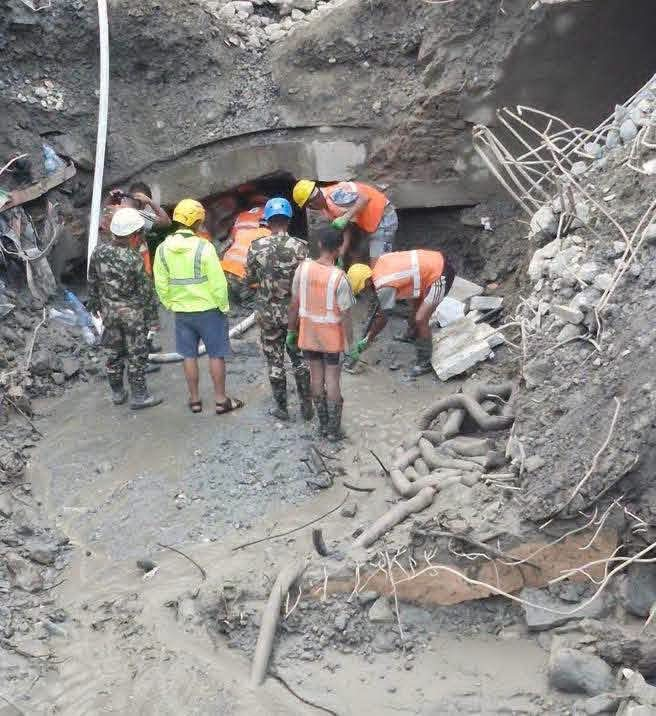
Debris from the subsequent rock-and-ice avalanche fell into the Lhende Khola – a river along the border – and may have created a temporary and fragile blockage.
One theory is that the blockage failed, releasing an unstoppable torrent of water, ice, rock and debris down the Lhende, into the Bhotekoshi and eventually down the Trishuli.
Ultimately, scientists are still trying to definitively understand how the flood happened, and the violent force with which it occurred.
More than 1400 people lost their lives.
In Jhabraj’s village, 77 people either died or remain missing; 57 houses and hundreds of goats, cows, buffaloes and chickens – central to the villagers’ subsistence lifestyle – were swept away.
Along the river basin, entire settlements were wiped out and thousands are still missing, including many trapped in the region’s hydropower plants.
Villages like Jhabraj’s have been partially cut off from the outside world, with bridges and roads disappearing in the floods.
Recovery efforts have focused on reinstating these regional connections and allowing aid to flow freely from village to village.
“After the flood everyone tried to contact their family members. When there was no contact, people started crying. It was impossible to go near the river,” he says.
“Since the flood we are trying to help people to stay mentally healthy. Many organisations have distributed relief, so now people have food. Local government is managing that.
“The main problem for people who survived, the government now has to manage their shelter, and many children are now orphans, we have to manage them also.”
Many Nepalese fear the road ahead will grow more dangerous, as a warming climate continues to accelerate glacial melt, threaten water security, increase the likelihood of natural disasters and upend the lives of the millions of people who live across the Himalayan mountain range.
Jhabraj dreads that the recent floods are a sign of things to come.
“It’s the result of global warming,” he says.
“In Tibet there are many ice lakes, so it will be more dangerous each coming year.”
“My opinion is that people are destroying nature each day, developed countries should see to this mess and help. For the coming generation it will be more challenging. It’s very sad.”
“Psychologically, many people are afraid.”
For many in the Himalayan valleys, who live agrarian lifestyles and whose contribution to global greenhouse-gas emissions is negligible, there is a feeling they are the ones paying the price for the actions and hubris of developed nations.
As the climate continues to warm, the same glaciers and snow-capped mountains that drive Nepal’s tourism industry may increasingly bring death and destruction to the valleys below.
Early 20th-century poet and philosopher Muhammad Iqbal wrote a famous poem in tribute to the Himalayas.
Originally written in Urdu and later translated into English by M.A.K. Khalil, Iqbal’s words are a stirring personification of the mountain range – portraying it as a guardian of the landscape, untouched by the ravages of time.
Perhaps Iqbal’s vision of the Himalayas – timeless, immutable and beyond humanity’s reach – is melting away.
Your condition does not show any signs of old age
You are young in the midst of day and night’s alternation
To the outward eye you are a mere mountain range
In reality you are our sentinel, you are India’s rampart
Snow has endowed you with the turban of honour
Which scoffs at the crown of the world-illuminating sun
Antiquity is but a moment of your bygone age
Dark clouds are encamped in your valleys
End.
Please consider joining out mailing list to support us in the making of these stories.